
Cheesecake
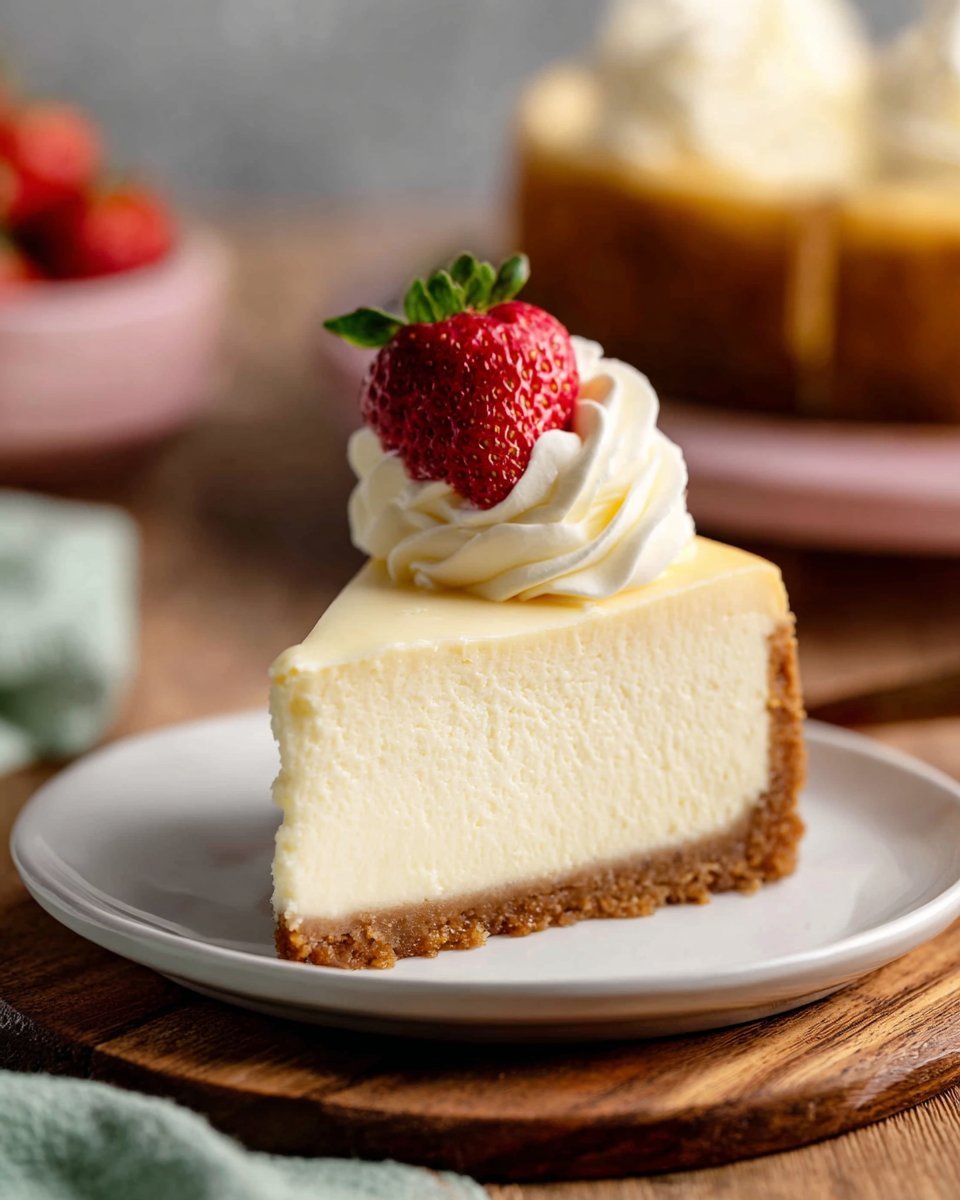
This classic cheesecake is a timeless dessert with a silky, creamy center and a buttery graham cracker crust. The filling is rich and tangy from full-fat cream cheese and sour cream, with a gentle lift from eggs and a hint of vanilla. The optional lemon juice brightens the flavor and adds a delicate citrus aroma that balances the creaminess. Texture is smooth and dense but still tender, with a slightly crisp crust that offers a pleasing contrast. This cheesecake is ideal for holiday dinners, celebratory gatherings, or any weekend when you want a showstopper dessert. If you enjoy variations and smaller formats, you might also like the caramel twist of this recipe for inspiration at caramel apple cheesecake bars.
Ingredients
- 1 and 1/2 cups (180g) graham cracker crumbs, finely ground for a compact, even crust.
- 1/4 cup (50g) granulated sugar, mixed into the crumbs to sweeten and help bind the crust.
- 5 Tablespoons (71g) unsalted butter, melted, used to moisten and set the crust.
- 32 ounces (904g) full-fat brick cream cheese, softened, the base of the rich, creamy filling.
- 1 cup (200g) granulated sugar, sweetens the filling while keeping the texture smooth.
- 1 cup (240g) full-fat sour cream, adds tang and silkiness to the batter.
- 1 teaspoon pure vanilla extract, for warm, rounded flavor.
- 2 teaspoons fresh lemon juice (optional), brightens and balances the richness if you choose to use it.
- 3 large eggs, help set the filling while keeping it tender when mixed gently.
Step-by-step Instructions
- Preheat and position rack. Preheat your oven to 350°F (177°C). Place the oven rack in the lower third of the oven to allow even baking without overbrowning the top.
- Make the crust. In a mixing bowl, combine the graham cracker crumbs, 1/4 cup (50g) granulated sugar, and the melted butter. Stir until the crumbs are evenly moistened. Press the mixture firmly and evenly into the bottom of a springform pan. A flat-bottomed measuring cup helps compress the crust.
- Par-bake the crust. Bake the crust for 10 minutes, then remove it from the oven and let it cool slightly while you prepare the filling. This step keeps the crust crisp under the filling.
- Beat the cream cheese and sugar. In a mixing bowl, beat the softened cream cheese and 1 cup (200g) granulated sugar until completely smooth and free of lumps. Scrape the bowl down as needed to ensure even texture.
- Add sour cream and flavorings. Add the 1 cup (240g) full-fat sour cream, 1 teaspoon pure vanilla extract, and, if using, 2 teaspoons fresh lemon juice. Mix on low until the mixture is smooth and homogenous.
- Add the eggs. Add the 3 large eggs one at a time, mixing on low speed after each addition just until incorporated. Do not overmix; overbeating can add air and cause cracks.
- Prepare the water bath. Wrap the outside of the springform pan with aluminum foil, sealing well to prevent water from seeping in, and place the wrapped pan inside a larger roasting pan. Pour hot water into the roasting pan until it reaches about halfway up the side of the springform pan. This water bath creates gentle, even heat and prevents cracking.
- Bake the cheesecake. Pour the cheesecake batter over the pre-baked crust, smoothing the top. Bake in the preheated oven for 55 to 70 minutes. The center should be slightly jiggly but set at the edges. For other baking styles and pan choices, see an example of a loaf-pan style bake at indulgent burnt basque cheesecake loaf pan.
- Cool gradually. Turn off the oven and leave the cheesecake inside with the door slightly ajar for 1 hour to cool gently. This gradual cooling helps prevent cracks.
- Chill before serving. Remove the cheesecake from the oven, unwrap, and let it cool to room temperature. Refrigerate for at least 4 hours, preferably longer, before serving to allow the filling to fully set.
Recipe Details
- Prep Time: 20 minutes
- Cook Time: 1 hour 5 minutes to 1 hour 20 minutes (includes 10-minute crust bake plus 55 to 70-minute filling bake)
- Total Time: About 7 hours 15 minutes including cooling and refrigeration time
- Servings: 12 slices
- Calories: Approximately 500 kcal per serving
In planning service and presentation you might find ideas for layered desserts helpful at pecan pie cheesecake trifle.
Tips, Storage & Variations
Practical tips
- Use room temperature cream cheese for a lump-free batter. Cold cream cheese leads to a grainy texture.
- Mix on low speed and avoid overbeating after adding eggs to prevent cracks and air bubbles.
- Wrap the springform pan tightly in aluminum foil to keep water out of the water bath.
- For a smoother top, run a thin knife around the edge of the filling as soon as it comes out of the oven if it has pulled away slightly.
Storage
- Refrigerate leftover cheesecake, covered, for up to 5 days.
- To freeze, wrap the fully chilled cheesecake tightly in plastic wrap and foil, or portion into slices and freeze in airtight containers for up to 2 months. Thaw in the refrigerator overnight before serving.
Flavor variations using existing ingredients only
- Bright lemon cheesecake: Use the optional 2 teaspoons fresh lemon juice to emphasize citrus notes.
- Pure vanilla cheesecake: Omit the lemon juice and increase the vanilla to 1 teaspoon for a straight-forward vanilla-forward profile.
- Mini cheesecakes: Divide the same recipe into a muffin tin lined with paper cups to make individual servings; a good reference for small formats is available at gnome mini cheesecakes.
For additional creative spin ideas and bite-sized versions, see this playful approach at pumpkin cheesecake cookies.
FAQ
How do I know when the cheesecake is done?
The edges should be set and the center should still have a slight jiggle. It will finish setting as it cools.Can I skip the water bath?
You can, but the water bath helps prevent cracking and creates a creamier texture.Why did my cheesecake crack?
Overmixing, baking at too high a temperature, or rapid cooling can cause cracks. Cool it slowly in the oven as instructed.Can I use low-fat cream cheese or sour cream?
This recipe is written for full-fat products for best texture and flavor. Low-fat versions may change density and taste.How long should I chill the cheesecake before serving?
Chill for at least 4 hours, though overnight refrigeration yields the best texture and flavor.Can I make this cheesecake ahead of time?
Yes. Make it up to 2 days ahead and keep it refrigerated, or freeze for longer storage.
People Also Ask
What causes a soggy cheesecake crust?
A crust can become soggy if it is not baked before adding the filling or if the water bath leaks. Par-bake the crust and seal the pan when using a water bath.How do I prevent my cheesecake from overbrowning?
Place the rack in the lower third of the oven and use the water bath for gentle, even heat.Is it better to beat eggs whole or separated for cheesecake?
Add whole eggs one at a time on low speed to keep the batter smooth without adding excess air.Can cheesecake be baked in a regular cake pan?
Yes, but a springform pan makes unmolding easier. If using a regular pan, line it thoroughly and allow extra cooling time before removing.Why is my cheesecake grainy?
Graininess often comes from cold cream cheese or overmixing. Use room temperature cream cheese and mix until smooth.How do I fix a cracked cheesecake?
Cover cracks with a thin layer of sour cream or a decorative topping, then chill to set. For a seamless finish, chill the whole cheesecake and serve slices with a garnish.Will altitude affect baking this cheesecake?
High altitude can change baking time and temperature. You may need slightly longer baking with careful monitoring.Can I double this recipe for a larger gathering?
Yes, double the ingredients and use a larger pan or two pans baked separately for more even results.
Conclusion
This cheesecake recipe is a dependable, elegant dessert that balances richness and subtle tang with a tender, creamy texture. It is approachable for home bakers and impressive for guests, and the method teaches good cheesecake technique that you can adapt in small ways. For inspiration on restaurant-style treats, visit The Cheesecake Factory, and for another detailed home-baker approach, see The Best Cheesecake Recipe – Sugar Spun Run. I hope you enjoy making and sharing this cheesecake; please try it, and tell your friends and family about the results for cozy celebrations and weeknight treats alike.


